

Bitcoin Mining Hardware

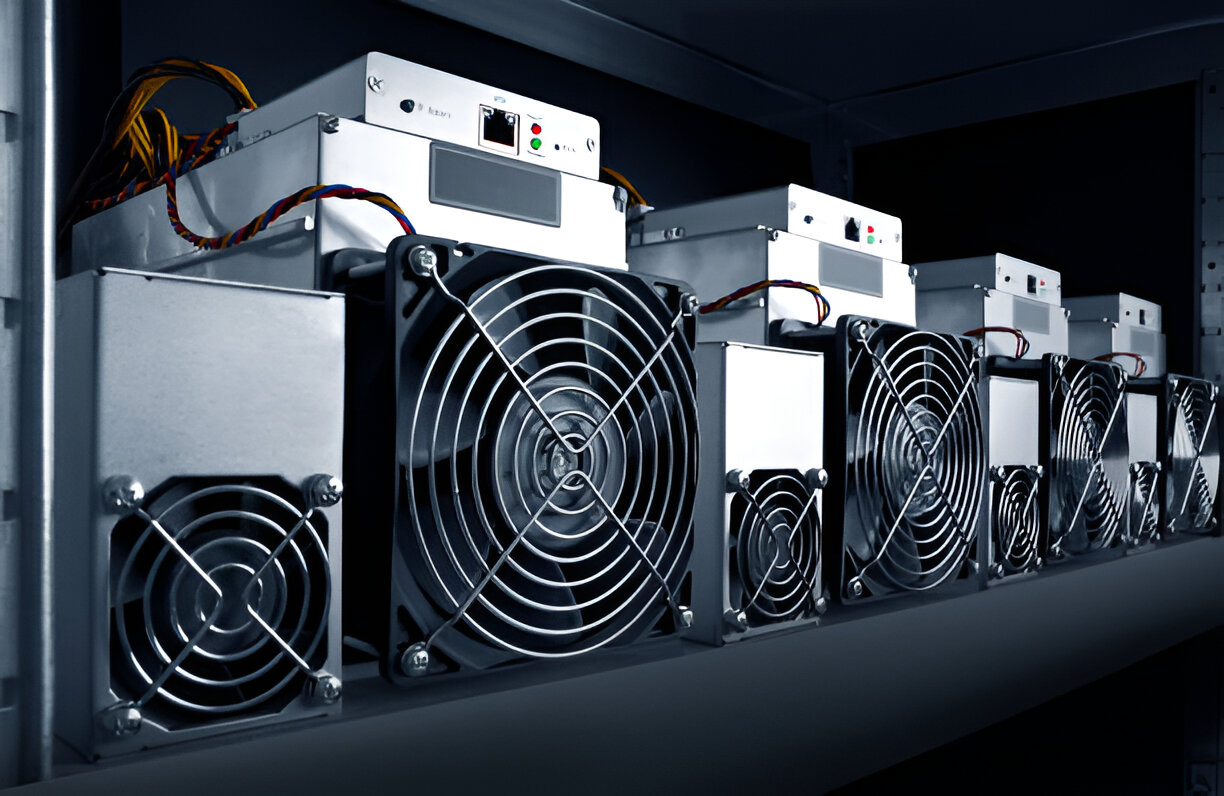
Bitcoin Mining Hardware
1. Introduction to Bitcoin Mining Hardware
Bitcoin mining hardware refers to specialized computing equipment designed to validate transactions and secure the Bitcoin network by solving complex mathematical problems. In return, miners are rewarded with newly minted bitcoins and transaction fees. Over the years, mining has evolved from simple CPU-based systems to highly advanced, energy-efficient machines built specifically for this purpose. The increasing difficulty of mining has made hardware selection a critical factor in determining profitability. Today, successful mining operations depend heavily on performance, electricity consumption, and technological efficiency.
2. Types of Bitcoin Mining Hardware
There are three main types of hardware used in Bitcoin mining: CPUs (Central Processing Units), GPUs (Graphics Processing Units), and ASICs (Application-Specific Integrated Circuits).
In the early days of Bitcoin, CPUs were sufficient for mining. However, as the network grew, GPUs became more effective due to their ability to process multiple calculations simultaneously. Eventually, ASIC miners were introduced, offering unmatched efficiency and speed. Today, ASICs dominate the Bitcoin mining industry, while CPUs and GPUs are mostly used for other cryptocurrencies or small-scale experimental mining. Each type of hardware varies in cost, performance, and energy consumption, making it important to choose the right one based on mining goals.
3. ASIC Miners: The Industry Standard
ASIC miners are purpose-built devices designed exclusively for mining cryptocurrencies like Bitcoin. Unlike general-purpose processors, ASICs are optimized to perform a single function—solving the SHA-256 hashing algorithm used in Bitcoin mining.
These machines offer extremely high hash rates, meaning they can process billions of calculations per second. Popular models include Antminer and WhatsMiner series, known for their efficiency and durability. Although ASIC miners are expensive, they provide the best return on investment in competitive mining environments. However, their main drawback is lack of flexibility, as they cannot be repurposed for other tasks or algorithms.
Energy consumption is another critical factor. While ASICs are more efficient than older technologies, they still require significant electricity, making access to cheap power essential for profitability.
4. GPU and CPU Mining Comparison
GPU mining uses graphics cards originally designed for rendering images in gaming and professional visualization. GPUs offer more flexibility than ASICs because they can mine different cryptocurrencies. They are also easier to upgrade or repurpose for other computing tasks. However, when it comes to Bitcoin mining specifically, GPUs are no longer competitive due to the network’s high difficulty level.
CPU mining, on the other hand, is the least powerful option. Modern CPUs cannot compete with ASICs or GPUs in terms of hashing power. CPU mining is mostly obsolete for Bitcoin but may still be used for learning purposes or low-difficulty coins.
In summary, while GPUs and CPUs played an important role in Bitcoin’s early development, they have largely been replaced by more advanced hardware in professional mining operations.
5. Key Features to Consider in Mining Hardware
When selecting Bitcoin mining hardware, several important factors must be considered. The most critical is hash rate, which measures how quickly a device can solve cryptographic puzzles. Higher hash rates increase the chances of earning rewards.
Energy efficiency is equally important, as electricity costs significantly impact profitability. Devices with lower power consumption per hash are more cost-effective in the long run. Another factor is initial cost and return on investment (ROI), which helps determine how long it will take to recover the purchase price of the hardware.
Durability and cooling systems also play a major role. Mining hardware operates under heavy workloads and generates substantial heat, so proper cooling is essential to maintain performance and prevent damage. Finally, software compatibility and ease of setup can influence operational efficiency, especially for beginners.
6. The Future of Bitcoin Mining Hardware
The future of Bitcoin mining hardware is expected to focus on greater energy efficiency, sustainability, and technological innovation. As global concerns about energy consumption rise, manufacturers are developing more eco-friendly ASIC chips with improved performance-per-watt ratios.
There is also growing interest in renewable energy-powered mining farms, reducing dependence on fossil fuels. Advanced semiconductor technologies, such as smaller nanometer chips, are likely to increase processing power while reducing heat output and electricity usage.
Additionally, the mining industry may see increased decentralization, with more efficient home-scale mining solutions becoming available. However, large industrial mining farms will likely continue to dominate due to economies of scale.
In conclusion, Bitcoin mining hardware will continue evolving rapidly, driven by competition, energy efficiency demands, and advancements in chip manufacturing technology.